 AiO
AIOVERSE // ARCHIVE ENTRY
System and environment
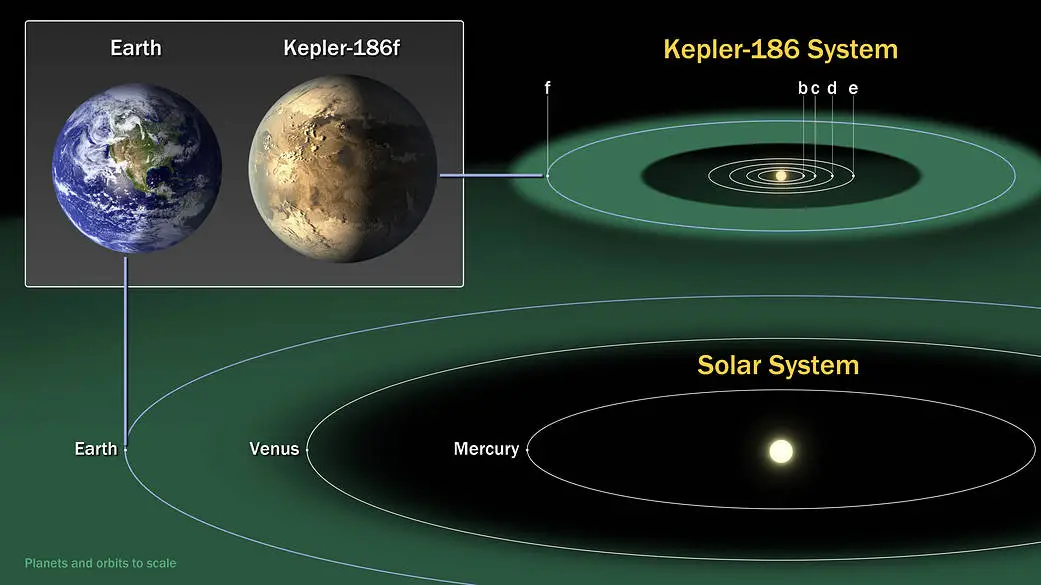
Kepler-186 is a red-dwarf system with at least five planets, B, C, D, E, and F. F lies at the outer edge of the habitable zone. Its real period is about 129.9 days. The setting uses full tidal lock. The night–day temperature contrast, with high-energy particles from red-dwarf flares, maintains a narrow QCD vacuum gradient inside the planet.
| Region | Environment | Function |
|---|---|---|
| Dark face | Permanent night and extreme cold. Glueball condensate freezes here as luminous crystal. Its slow glow is often mistaken for bioluminescence. | Low-light exploration, heat management, crystal collection. Principal habitat of electronic life. |
| Bright face | Permanent red light, higher temperature, strong radiation. Crystals are periodically excited. This is the activation side of the symbiont tanks. | Radiation and heat protection, red filter, tank puzzles. |
| Terminator | Gradient of temperature and light. The metastable state is least stable here, and easiest to calibrate. | Candidate band for the colony and the Cradle plant. |
| System layer | Orbital station, tunnel gates, wormhole route. | Short transfer between scenes and station reports. |
Inside the Solar System, glueball condensate holds only for milliseconds to hours in an artificial resonator. On F, night-side freezing, day-side pumping, and a 130-day orbit form a natural planetary heat pump. Cradle facilities span dark and bright faces, matching the boundary condition. Closing the Cradle hands the pump's phase to Sirius: population replaces environment, and the lock is forced.
The three core scenes are the dark face, the bright face, and the Kepler-186 system.